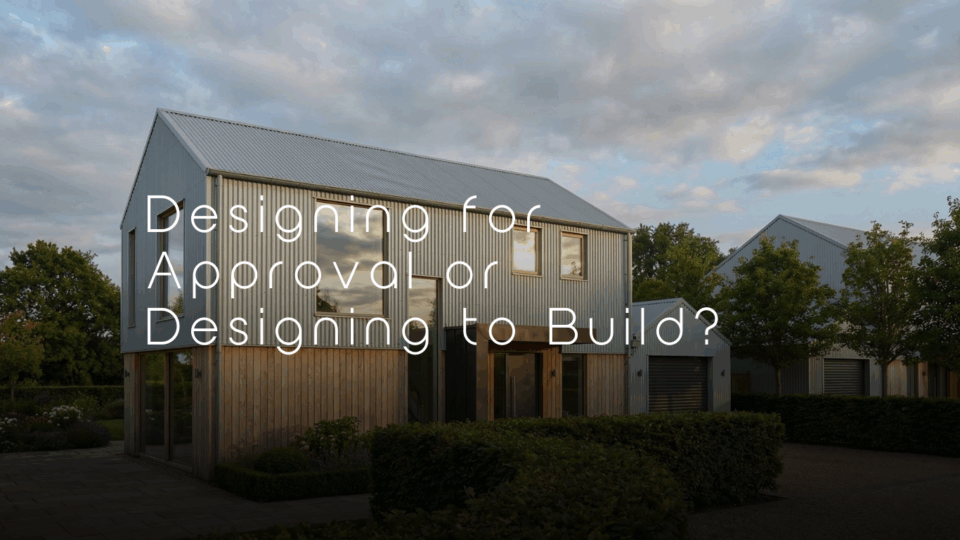
Designing for Approval or Designing to Build?
Securing planning permission is a significant milestone in any project. But approval alone does not guarantee that what has been designed can be delivered efficiently, compliantly, or cost-effectively.
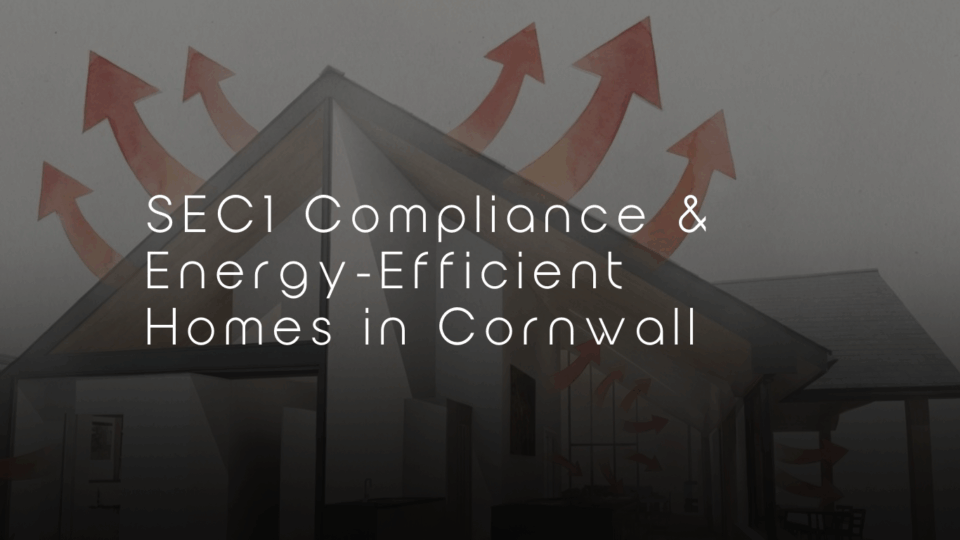
Increasingly, the technical demands placed on residential projects mean that early design decisions carry long-term consequences. With Cornwall Council’s declared climate emergency, the continued drive towards low and zero carbon homes, and the steadily rising standards within the Building Regulations, particularly around insulation, energy performance and heat loss, it is more important than ever to establish a clear technical strategy from the outset.
Some designers focus solely on preparing drawings for planning. While this may be sufficient to secure consent, it does not always address how the building will ultimately perform, how it will comply with Part L or Part O, or how it will be constructed in practice.
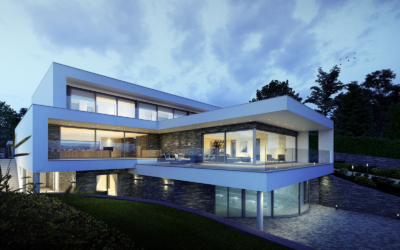
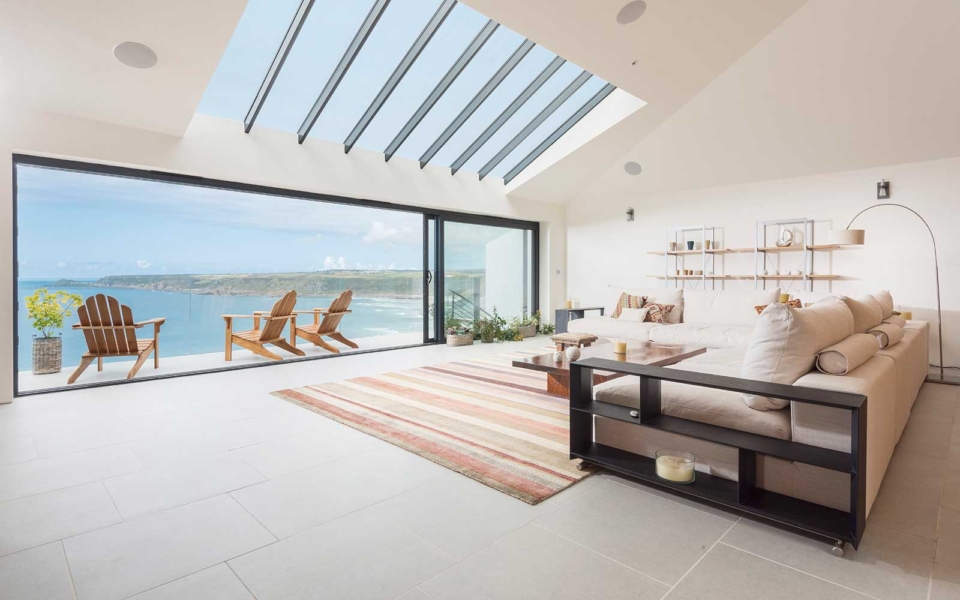
Are your walls thick enough to fit the insulation required? Is there enough height for a roof build up that works? Does that amazing, glazed elevation result in summer overheating?
Our approach is deliberately integrated.
With an in-house technical team and domestic energy assessors, we can support projects from early concept design through to construction. We can prepare Design SAP calculations, EPCs and Dynamic Thermal Modelling for Part O, alongside detailed Building Regulations packages that help resolve the practicalities of how a building will meet current standards.
This joined-up approach allows key decisions around fabric performance, glazing, orientation, overheating risk and construction build ups to be considered at the right time, before planning is secured and before costly revisions become necessary. It helps ensure that what you are seeking permission for not only looks great, but is technically viable and aligned with current and emerging energy requirements.
For homeowners and developers alike, this early coordination reduces risk. It provides clarity around compliance, supports more accurate pricing, and avoids situations where projects require redesign to satisfy energy or overheating regulations after consent has been granted.
As standards continue to tighten and expectations around performance increase, the value of an integrated team becomes more apparent. A project that is considered holistically from concept to completion, is more likely to progress smoothly, perform as intended, and meet the ambitions set for it at the outset.
The question is no longer simply whether a design can achieve planning approval, but whether it is ready for everything that follows.
Truro: 01872 225 259
Exeter: 01392 979 135
Email: hello@laurenceassociates.co.uk